Surya Namaskar Yoga: Everything You Need to Know
A practical guide to Surya Namaskar yoga, with a sequence-planning table, modification notes, and official NIH NCCIH cautions about learning with a teacher.
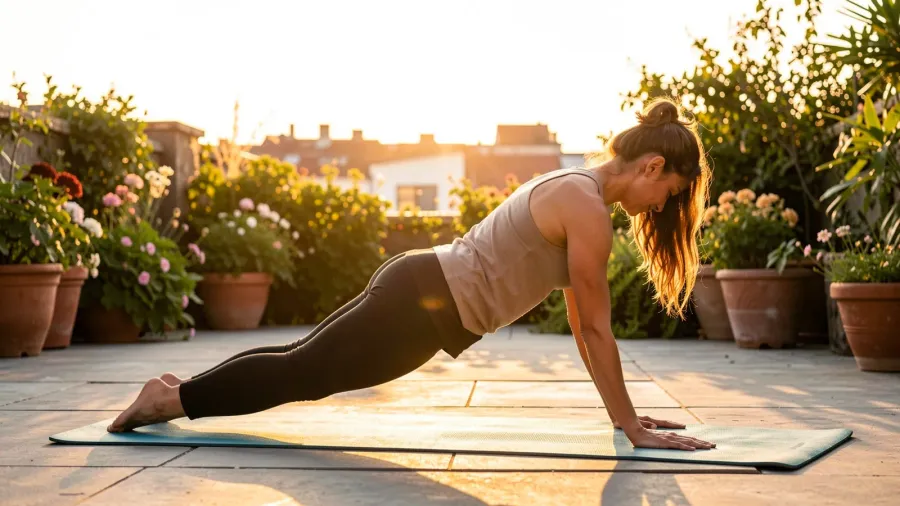
Learn the sequence slowly, then count rounds later
Surya Namaskar yoga, often called a sun salutation, is a linked set of postures, not a single pose and not a race. Different schools use slightly different shapes and different numbers of steps. That is normal. What is not useful, on day one, is treating a fast online demonstration as a quota. The economical way in is to learn the links with a teacher, at a pace that leaves the breath ordinary, and to repeat a small number of slow rounds rather than to buy a new mat and a twenty-round challenge.
NCCIH, at NIH, says yoga is generally considered a safe activity for healthy people when practiced appropriately under a qualified instructor, and that you can still be injured. Learning without supervision has been associated with increased risk. If you are pregnant, older, or managing a health condition, talk with your health care providers and the teacher, and do not use a vigorous sequence to postpone care. Official summary: 5 things you should know about yoga.
This is not a calorie chart, and it is not a medical protocol. If a teacher has already given you a modified salute — or has asked you to skip some links — that version is your sequence.
What a round is actually made of
Most sun salutations move you from standing, through a forward bend, into some kind of lunge or plank-related shape, toward the floor, then through a small backbend or a low lift, and back to standing. The names and the exact count vary. The jobs do not: you will fold, you will support some weight on the hands, you will go toward the floor, and you will come back up.
Those jobs have costs. Wrists, shoulders, lower backs, and hamstrings do a lot of the work. If any of those areas is already a problem, a flowing salute may be a poor first project. A slower class, or a version that keeps the knees down and the backbends small, is not a lesser practice. It is a better buy.
You do not need a special “sun salutation kit.” A non-slip mat, clothing you can move in, and enough clear floor to step back are enough. A folded blanket for the knees can be more useful than a new prop bag.
A planning table for the first weeks
| Decision | A conservative choice | A more demanding choice, later | Why the conservative one is cheaper |
|---|---|---|---|
| How to learn the links | A beginner or slow class, or a short session with a teacher who will watch you | A fast video, learned only from a screen | NCCIH’s caution about unsupervised learning is especially relevant in a flowing sequence |
| How many rounds | Two or three slow rounds, or even one, done with a rest | A large number, done to a beat | Fatigue is when form collapses and wrists or backs complain |
| The pace | One breath, or more, in each shape, with permission to pause | A continuous, athletic flow | A pause costs nothing and prevents a sloppy landing |
| Weight on the hands | Knees down, or hands on blocks, if a full plank-style shape is too much | A full held plank and a low push-up shape | Shoulder and wrist irritation is an expensive “achievement” |
| The backbend in the sequence | A low cobra or a small lift, as in a cautious floor practice | A higher lift because the video went higher | Height is not a score |
| The fold | A soft knee, a long spine, and a bend that can stop halfway | A locked-knee drop to reach the floor | Hamstrings and lower backs are not improved by a bounce |
| Rest | Stand or lie down after the rounds | Immediate sit-ups or another sequence | The salute is already a complete practice if you stop |
If you only remember one row, remember the rounds. Ambition shows up as an extra cycle you did not need.
How to practice at home once you have been taught
Write your version on a card, in your own words, including the modifications. Then put the card near the mat and ignore other sequences for a few weeks. Warm the body with a little walking or with slower standing movements first, especially in a cold room.
Move as if you could stop in the middle of any link. If the breath becomes a gasp, slow down or stand up. If a wrist complains, drop the knees or take more weight into the legs. If the lower back pinches in the lift, stay lower, or skip that link and ask a teacher.
Count rounds only after the shape feels familiar. Three honest rounds, a few times a week, will teach you more than a single exhausted morning of twelve. There is no official number of salutations that equals “a real practice.”
If you like to practice first thing, give yourself enough time to be fully awake, and keep the room warm enough that you are not flinging cold joints into a full fold. If you practice in the evening, finish with enough quiet time that you are not going straight from a vigorous flow into bed in a wired state, or scale the sequence down.
A checklist before you start rounding up
- I have learned this sequence, or a modified one, from a person if at all possible
- I know which links I will shrink or skip
- The floor is non-slip, and I have space to step back
- I will start with a small number of slow rounds
- I can stop mid-sequence and rest
- A clinician has been consulted if I have a health condition, an injury, or a pregnancy
- I will not use a fast salute as a stand-in for medical care
Questions people ask after the first breathless attempt
Which official version of Surya Namaskar should I learn?
The one your teacher can actually watch you do. Schools differ, and arguing about the “original” count is a poorer use of time than learning one coherent, conservative sequence. Once that one is comfortable, you can learn another if you want.
How many rounds should a beginner do?
Fewer than a fitness challenge will suggest. Two or three slow rounds, or even one, are enough at the start. Add rounds only when the last one still looks like the first.
Can I do this every day?
You can do a gentle version often, if it continues to feel reasonable. You should not demand a vigorous daily quota from a body that is still learning the links. Take a day off when you are sore in a sharp way, and get advice if that soreness is worrying.
Is Surya Namaskar a complete yoga practice by itself?
It can be a complete session for a day, especially if you add a quiet moment at the end. It does not have to be the only thing you ever do, and it is not a required gateway to “real” yoga. If a slower, less flowing class suits you better, take that class.