Chair Yoga Routines: Beginner's Guide
A beginner's guide to chair yoga routines, with sample time budgets, a build-your-own table, and official NIH NCCIH notes on starting slowly and safely.
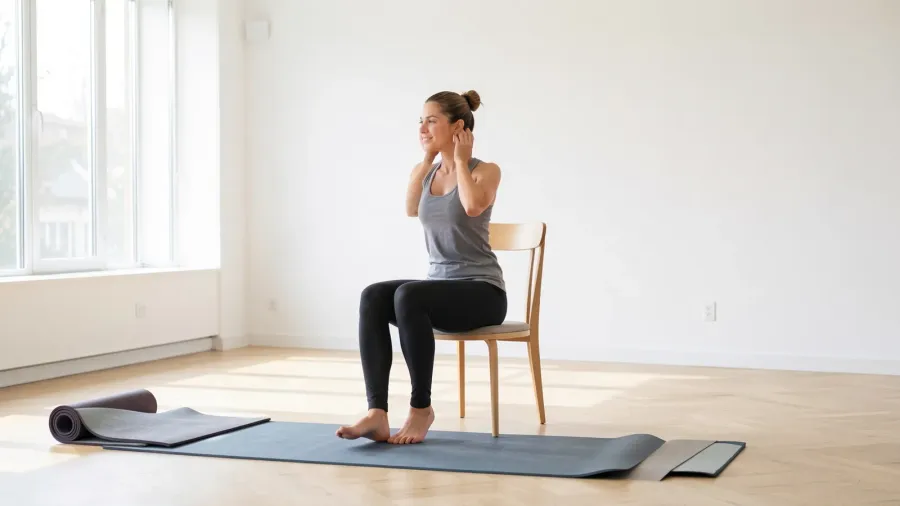
A routine is a repeated list, not a new class every morning
Chair yoga routines work when they are short enough to repeat. The expensive habit is a new video each day, with new instructions and a slightly different chair angle. The cheap habit is one list, written down, taught or at least reviewed by a person, and timed so it fits a real morning or a real evening.
NCCIH, part of NIH, advises starting yoga slowly, choosing a class at the right level, and practicing under a qualified instructor when you can. Chair yoga is noted as a gentler option for people with limited mobility. Older adults, and anyone with a medical condition, should talk with a health care provider and the teacher. Do not use a routine, however gentle, to put off medical care. Official pages: 5 things you should know about yoga and the yoga for health digest.
If you already have a set of chair yoga exercises you know, this page is about putting them in an order and giving them a clock. If you do not, learn the movements first. A routine made of shapes you cannot yet do safely is only a wish list.
Build from a time budget, then from a body budget
Pick the time you actually have on a weekday, then subtract a minute for sitting down and a minute for sitting still at the end. What remains is the movement budget. A ten-minute routine that happens is worth more than a thirty-minute plan that does not.
| Time you have | How to spend it | What to leave out | A sign the routine is too ambitious |
|---|---|---|---|
| About 8–10 minutes | Arrive, hands and shoulders, one leg movement, a small reach, rest | Standing work, new twists, and a second sequence “if there is time” | You are watching the clock in a panic and skipping the rest |
| About 15 minutes | The ten-minute list, plus a second leg or arm block, and a slightly longer rest | Fast flowing between movements, as if this were an aerobics tape | You cannot remember the order without starting a new video mid-session |
| About 20 minutes | The fifteen-minute list, plus an optional supported stand if that is already approved and safe, and more quiet sitting | Adding five new internet exercises to “fill” the time | The last five minutes are sloppy, and you feel worse, not settled |
| A tired or unwell day | Arrive, breathe, one comfortable movement, rest | The full card | You treat a shortened day as a broken streak |
| After a class | The teacher’s own short version, written in your words | A conflicting routine from another source, used the same evening | You cannot remember which version skips the neck work |
Write the order on a card and keep the card on the chair. The card is the routine. The internet is a library, not a boss.
How to write the card so you will still use it next month
Use ordinary words: “sit, roll shoulders, lift heels, small turn, sit quietly.” Put your modifications on the same card, including “skip this.” If a teacher has set a number of repeats, write that number, and write that you may do fewer.
Keep the same chair, in the same place, if you can. A routine that depends on a quiet room at a community center is a class, which is valuable, but you still need a home version that can survive a messy Tuesday. The home version should be the shorter one.
Place the harder movement, if there is one, in the middle, not at the end when you are already tired, and not at the very start before you have noticed how you feel. End with rest, even if the rest is only a minute. A routine that ends in a rush trains you to rush.
Review the card after two weeks. If a movement is always skipped, either learn it properly with a teacher or remove it. A dead line on a card is clutter.
A sample week that does not require a new personality
Monday: the ten-minute card, before the day has fully started, or at lunch if mornings are already full. Wednesday: the same card, or the class if this is a class week. Friday or Saturday: the slightly longer card only if the shorter ones already happened; otherwise repeat the ten-minute version. If a day falls out, leave it out. Do not stack two routines on Sunday to balance a ledger.
If you live with other people, tell them the chair is in use for a short, known period. A routine that can be interrupted every thirty seconds is not a routine, and you should not have to argue for ten quiet minutes more than once. If the house cannot give you that, use a time when you are already alone, even if it is less photogenic.
Travel days can use a hotel chair or a waiting-room sit, with only the first two blocks: arrive, hands and shoulders, rest. That still counts. The point of a written routine is that it can shrink without disappearing.
Keep the card dull on purpose. Decorated plans with motivational slogans tend to be abandoned when the slogan feels false. Times, movements, and skips will still be true in February.
If pain, dizziness, or a new stiffness shows up and stays, the next step is not a different routine from a new teacher on the internet. It is a pause, and a conversation with a clinician or with the teacher who already knows you. Adjust the card only after that conversation.
A checklist for a routine you can keep
- The list is made of movements I already know, or that a teacher has set
- The time matches a weekday, not an ideal weekend
- The chair and the floor are stable
- The order is written down, including skips
- There is a rest at the end
- A shorter version exists for a tired day
- A clinician has been consulted if I have medical issues, and I will not use this card to delay care
Questions about sticking with it, not about collecting it
How many chair yoga routines do I need?
One main routine, and a shorter spare, are enough. A folder of seven “daily” routines is usually a delay tactic. Repeat the same list until it is familiar, then change it on purpose.
Should a morning routine differ from an evening one?
It can. Mornings may need more time to arrive and a warmer room. Evenings may need a quieter end and less standing work. The movements can still be the same. The clock and the ending can change.
Can I use a printable routine I have never been taught?
You can read it, but you should be cautious about copying it move for move. Official safety advice favors instruction, especially if you are older or have health conditions. Use a printable to remember a class, not to replace one.
What if I miss several days?
Start again with the short version. Do not “catch up” with a long session. A routine is a habit of returning, not a debt.